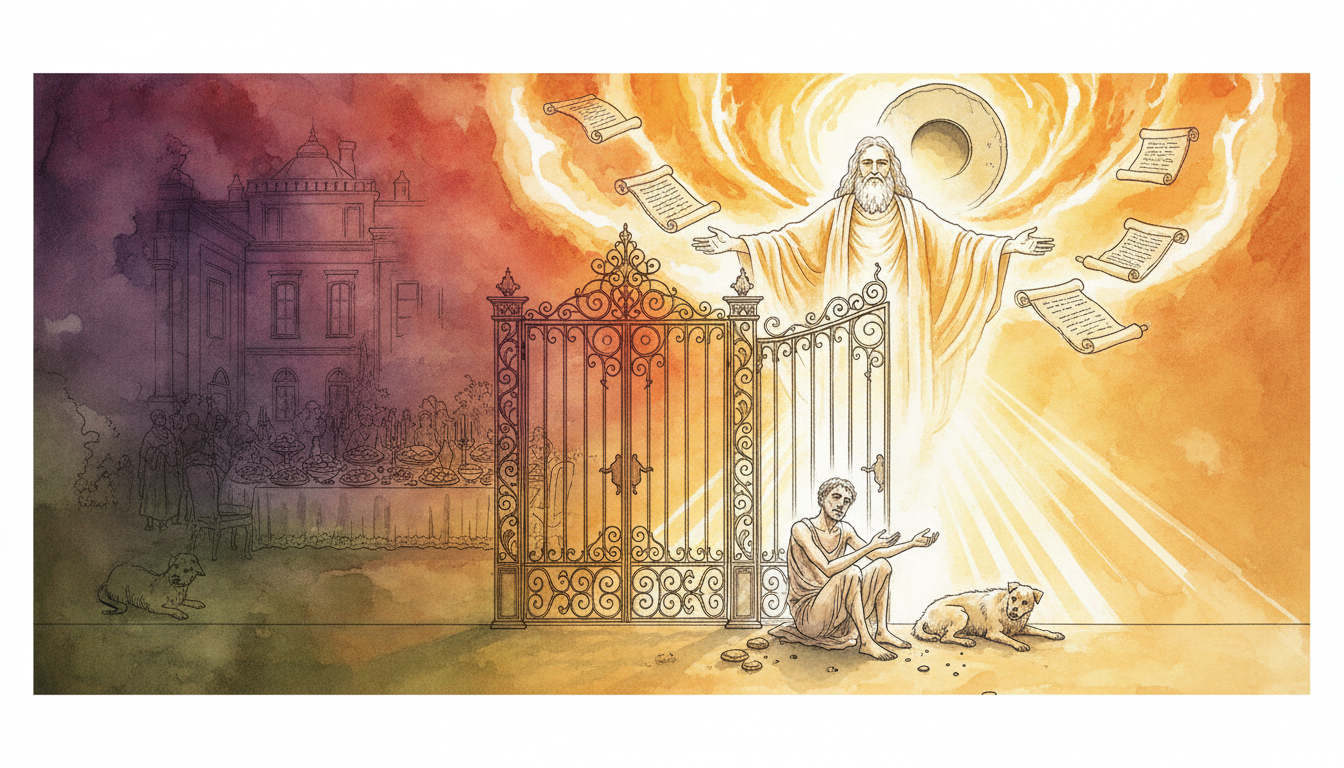
The Parable of Lazarus and the Rich Man: Mercy, Justice, and the Hope of Resurrection
This five-chapter course explores Luke 16:19-31 as a window into Jesus' teaching on wealth, divine mercy, economic justice, and the biblical hope of bodily resurrection. Rather than treating this parable as a simple cautionary tale about the afterlife, we recover its original richness by reading it carefully within Luke's Gospel, the testimony of Moses and the Prophets, and early Christian witness. Each chapter anchors in the biblical text itself, then enriches our understanding through historical, theological, and cultural evidence. You will discover that the parable teaches something far more transformative than inherited tradition often suggests—God's persistent mercy, the urgent call to justice, and the concrete hope of renewed creation.
Chapters
Reading the Text Itself—Luke 16:19-31 and What Jesus Actually Says
Luke 16:19-31 (The Parable of Lazarus and the Rich Man; read the full parable in context within Jesus' teaching on wealth and stewardship in Luke 16)
The Gospel Context—Jesus' Programmatic Mission to the Poor and the Reversal of Fortune
Luke 4:18 (Jesus' mission statement) and Luke 6:20-26 (The Beatitudes and woes), read alongside Luke 16:19-31 to show the parable as the lived consequence of Jesus' kingdom proclamation
The Spiritual Danger of Wealth and the Idolatry of Comfort—Why the Rich Man Failed
1 Timothy 6:10 (The love of money is the root of all evil), James 2:1-13 (Favoritism and the law of love), and Luke 12:13-21 (The parable of the rich fool) read alongside the rich man's indifference to Lazarus at his gate
Moses and the Prophets—The Testimony That Calls Us to Justice and Transformation
Amos 6:1-7 (The OT prophetic witness against the wealthy who ignore the afflicted), Proverbs 19:17 (Generosity to the poor as service to God), and Hebrews 13:16 (Sharing as pleasing to God), with Luke 16:29-31 as the parable's own appeal to prophetic testimony
Bodily Resurrection and Final Judgment—The Hope Beyond the Intermediate State
Matthew 25:31-46 (The judgment of nations and the final separation of sheep and goats based on care for the vulnerable) read in dialogue with Luke 16:19-31 to show the parable's eschatological fullness
Sources Used
Every insight traces to a named source. 0 AI-generated interpretations.
Create your own Bible studies — free.
Ask any question. Get evidence from named scholars and curated datasets in minutes.
Get Started Free