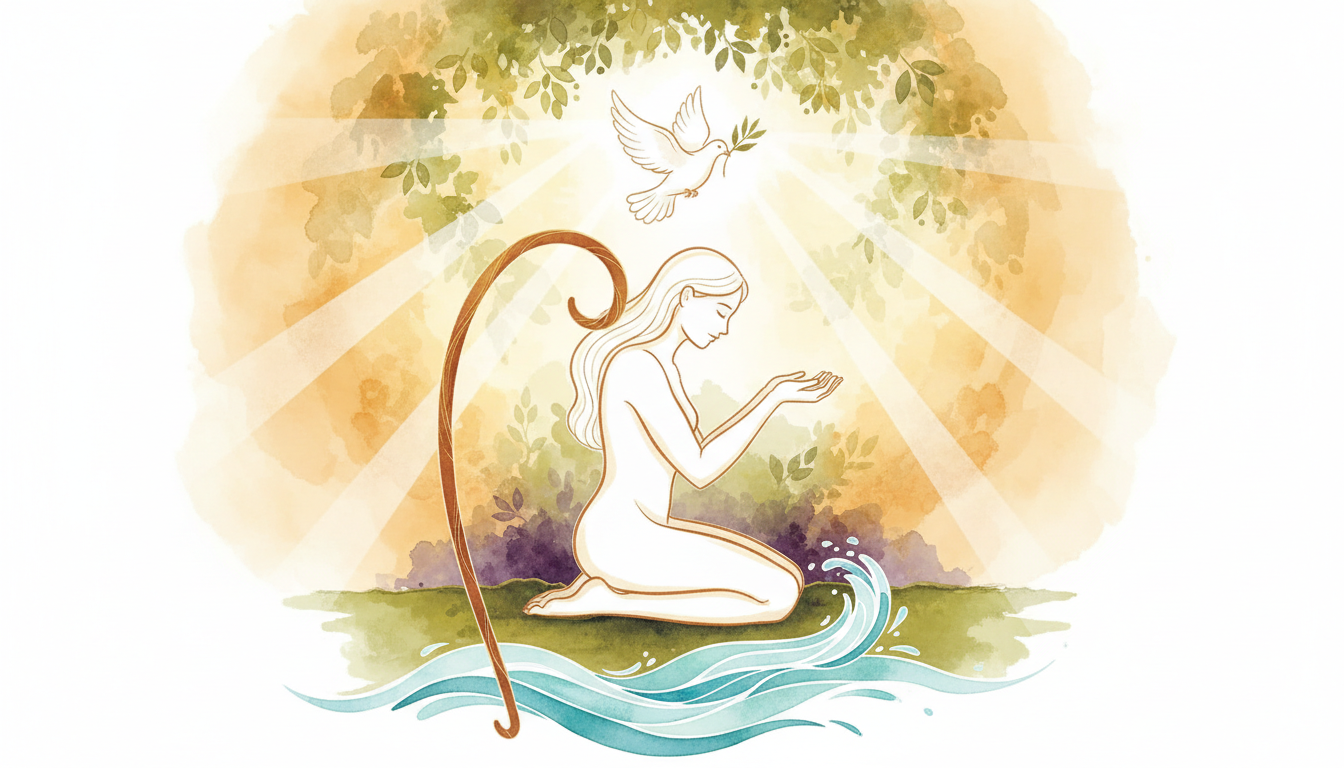
What Does the Bible Say About Anxiety? A Whole-Person Spiritual Practice
This five-chapter course explores biblical teaching on anxiety as an integrated concern involving spiritual trust, physical provision, communal belonging, and embodied rest. Beginning with Jesus' foundational teaching in Matthew 6, we trace how Hebrew wisdom, the Psalms, and Paul's letters present anxiety not as an isolated internal state to manage, but as a whole-person invitation to deeper trust in God's care. Through careful attention to biblical vocabulary, we discover how ancient authors understood the connection between body, spirit, community, and peace—offering a richer vision than modern tradition often recognizes.
Chapters
Jesus' Radical Vision: Anxiety and Trust in Matthew 6:25-34
Matthew 6:25-34 (Jesus teaches: 'Therefore I tell you, do not be anxious about your life, what you will eat or drink; or about your body, what you will wear. Is not life more than food, and the body more than clothes? Look at the birds of the air: they do not sow or reap or store away in barns, and yet your heavenly Father feeds them. Are you not much more valuable than they? Can any one of you by worrying add a single hour to your life? And why do you worry about clothes? See how the flowers of the field grow...')','focusQuestion':'What is Jesus' direct command about anxiety, and what theological grounds does He give for trusting God rather than worrying about physical provision?','evidencePriority':[
The Psalms' Honest Permission: Lament, Fear, and Returning to Trust in Psalm 42:5,11 and Psalm 23
Psalm 42:5,11 (The psalmist cries: 'Why, my soul, are you downcast? Why so disturbed within me? Put your hope in God, for I will yet praise him, my Savior and my God') and Psalm 23 (David declares: 'The Lord is my shepherd, I lack nothing. He makes me lie down in green pastures, he leads me beside quiet waters, he refreshes my soul')
Paul's Practical Framework: Prayer, Thanksgiving, and Peace in Philippians 4:6-7 and 1 Thessalonians 5:16-18
Philippians 4:6-7 ('Do not be anxious about anything, but in every situation, by prayer and petition, with thanksgiving, present your requests to God. And the peace of God, which transcends all understanding, will guard your hearts and your minds in Christ Jesus') and 1 Thessalonians 5:16-18 ('Rejoice always, pray without ceasing, give thanks in all circumstances; for this is the will of God in Christ Jesus for you')
Peter's Theology of Care: Casting Anxiety on God in 1 Peter 5:6-7 and the Integration of Body, Spirit, and Community
1 Peter 5:6-7 ('Humble yourselves, therefore, under God's mighty hand, that he may lift you up in due time. Cast all your anxiety on him because he cares for you') with contextual attention to 1 Peter 5:1-14 showing anxieties within persecuted community
The Integrated Vision: Fear Cast Out by Love, Spirit-Enabled Living, and Whole-Person Peace
1 John 4:18 ('There is no fear in love. But perfect love drives out fear, because fear has to do with punishment. The one who fears is not made perfect in love') with 2 Timothy 1:7 ('For the Spirit God gave us does not make us timid, but gives us power, love and self-discipline') and synthesis of Matthew 6, Philippians 4, Psalm 23, and 1 Peter 5
Sources Used
Every insight traces to a named source. 0 AI-generated interpretations.
Create your own Bible studies — free.
Ask any question. Get evidence from named scholars and curated datasets in minutes.
Get Started Free